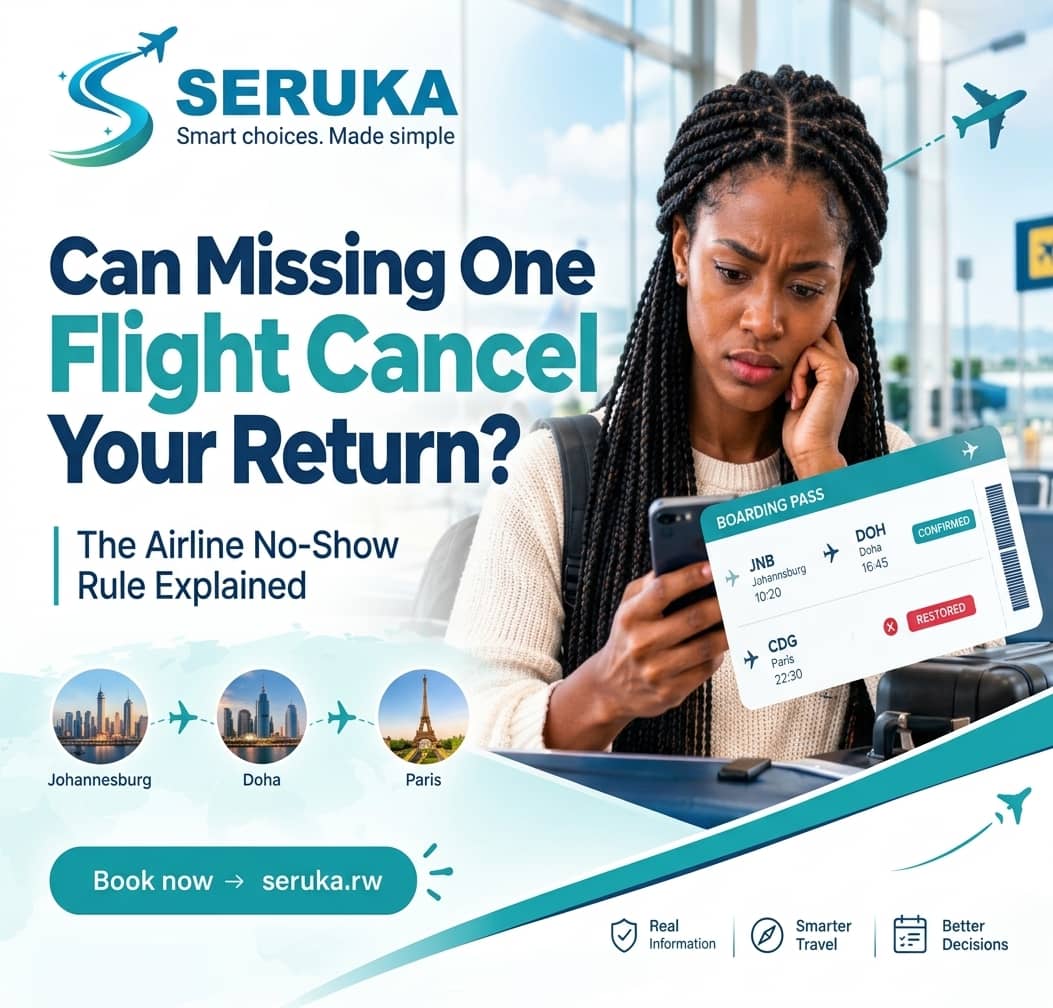
The Same Flight, Two Different Booking Experiences
Imagine you need a flight from Kigali to Nairobi. You can open your phone, search for a ticket and pay within minutes. Or you can walk into a travel office and have an agent arrange the journey for you.
Both routes can lead to the same aircraft, the same seat and the same airport. So what actually changes when you choose one booking method over the other?
The interesting answer is that the biggest difference isn't always the flight itself. It is the way you access, understand and manage the booking.
Two Doors Into the Same Travel System
When you book a flight, you're not simply buying a seat from a website. Behind the screen are airline schedules, availability, fares, booking rules and reservation systems.
Travel sellers can access airline content through different distribution channels. Global Distribution Systems, commonly called GDSs, connect travel providers with travel sellers and allow sellers to search schedules, availability and fares from multiple providers. 1
That means an online booking platform and a physical travel agency can sometimes be different interfaces sitting on top of parts of the same wider travel-distribution ecosystem.
ONLINE BOOKING
- You search for the trip yourself.
- You compare available options on your screen.
- You choose the fare and services.
- You enter your passenger information.
- You complete payment yourself.
- Your confirmation and travel documents are delivered digitally.
TRAVEL AGENT
- You explain your trip to an agent.
- The agent searches available options.
- The agent can explain itinerary and fare conditions.
- The agent enters the booking information.
- The booking and ticketing process is handled for you.
- You have a person you can contact about the booking.
Online Booking: More Control in Your Hands
Online booking puts the search directly in front of you. You can compare departure times, connections, airlines and available fares without waiting for someone else to search for you.
It is particularly convenient for straightforward trips. If you already know where you're going and what you want, the process can be quick and available at any time.
But that control also means responsibility.
You are responsible for checking passenger names, baggage conditions, connection times, fare restrictions and cancellation rules before completing the purchase.
Travel Agents: The Human Layer
A travel agent adds a person between you and the booking system. Instead of searching through every option yourself, you explain what you need and the agent searches and builds the itinerary.
This can become especially useful when the trip is complicated: multiple destinations, several passengers, unusual connections, changes to an existing booking or other arrangements that require more than simply clicking "Buy."
Agents can also use professional reservation systems to create and modify bookings. For example, Amadeus provides training for reservation agents covering PNR creation and modification, pricing, itineraries and ticketing. 2
The hidden difference: online booking gives you more of the process directly; an agent gives you a human who can work through the process with you.
But Who Has the Better Price?
This is where many travellers make a mistake.
There isn't a universal rule that says an online booking will always be cheaper than a travel agent, or that an agent will always find a better fare.
Flight prices can depend on the airline, route, availability, fare conditions, distribution channel, taxes, fees and the services included in the purchase.
A travel agent may also charge a service fee, depending on the agency and the service provided. In some markets, agents can process separate service-fee transactions alongside airline ticket transactions. 3
So the number you should compare isn't always just the headline ticket price.
What Happens When Something Goes Wrong?
This is where the difference between the two experiences can become much more noticeable.
Imagine your flight changes, your connection is disrupted or you need to modify the itinerary.
With an online booking, you may need to manage the change through the website or app used for the booking, depending on the ticket and booking channel.
With an agent booking, the agent may be able to assist with the booking and rebooking process. Industry systems support changes and cancellations through connected reservation systems, although exactly what can be changed depends on the airline, ticket conditions and booking channel. 4
So Which One Fits Your Trip?
There isn't one booking method that fits every traveller.
For a simple trip where you know exactly what you want, online booking can give you speed, direct control and easy access.
For a complicated itinerary, group journey or situation where you want someone to help manage the booking, a travel agent can provide a different kind of value.
The important thing is knowing what you're actually paying for: not just the seat on the aircraft, but also the access, convenience, information and support surrounding that seat.
The Ticket Is Only the Beginning
The next time you see an online flight price and compare it with a quote from a travel office, don't ask only: "Which one is cheaper?"
Ask what is included, who is handling the booking, what happens if the journey changes and how much control you want over the process.
Because two people can sit on the same aircraft, in the same cabin, while having completely different booking experiences.
Travel Smarter with Seruka
Understand how travel works, compare your options and make smarter choices before you book.
Book now → seruka.rw