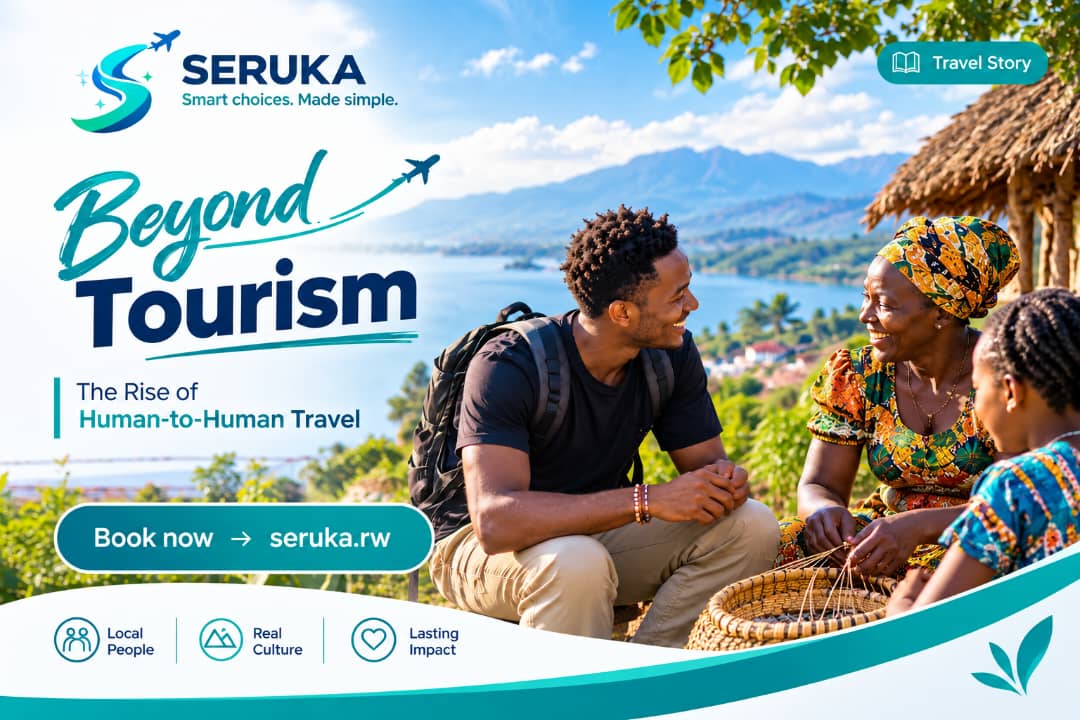
Beyond Tourism: The Rise of Human-to-Human Travel
Daniel arrived in a small East African town with a camera, a list of places to visit, and two days to see everything. He wanted photographs he could share when he returned home.
On his first afternoon, a sudden rainstorm changed his plans. He took shelter near a small family-run food stall, where the owner, Amina, invited him to wait until the rain passed.
What began as a few minutes of shelter became a conversation about family, food, work, and the town Daniel had come to explore. Amina explained how she prepared a local dish and why its recipe had been passed down through generations.
Daniel eventually left with his photographs. But the moment he remembered most was not a landmark. It was the conversation.
When people become the destination
Traditional tourism often begins with a place. A famous waterfall. A historic building. A national park. A beach that appears on thousands of travel pages.
Human-to-human travel begins with a different question: Who can I learn from when I get there?
It is the traveler who joins a local cooking experience, learns a traditional craft from an artisan, listens to a guide explain the history of their community, or shares a meal with a family that chooses to welcome visitors.
The attraction still matters. But the people give it meaning.
From visitor to temporary participant
Imagine visiting a new country and spending the entire trip moving between hotels, vehicles, restaurants, and attractions. You may see many things without ever understanding much about the people who call that place home.
Now imagine staying a little longer. You visit a neighborhood market, learn why a particular food matters to local families, or spend an afternoon learning a skill from someone who has practiced it for years.
You are still a visitor. You do not suddenly become part of the community simply because you arrived. But you have created space for a more personal exchange.
Instead of asking only, "What should I see here?", ask, "What can I understand here that I couldn't learn from a photograph?"
Why East Africa has a powerful story to tell
Across East Africa, travel can open doors to local food traditions, creative communities, craft-making, farming experiences, music, storytelling, and everyday life beyond the familiar tourist routes.
Rwanda, for example, offers travelers opportunities to discover local culture alongside its landscapes, from experiences around Lake Kivu to Kigali's creative spaces and community-led activities. Across the wider region, local guides, independent businesses, and cultural practitioners can help visitors understand places through the people who know them best.
These experiences do not need to be elaborate. Sometimes, a thoughtful conversation or a locally guided walk can become the part of a journey that stays with someone longest.
For communities, responsible visitor experiences can create income, support local businesses, and help keep traditions visible. The strongest experiences are built with communities, not simply designed around them.
Connection must come with respect
Human-to-human travel is not about treating people's homes, cultures, or daily routines as entertainment. Genuine connection cannot be demanded, and not every community member wants to participate in tourism.
Travelers should respect privacy, ask permission before taking photographs, follow local guidance, pay fairly for services, and choose experiences where the community has a meaningful say in how visitors are welcomed.
The goal is not to collect human encounters like souvenirs. It is to leave an exchange in which both sides feel respected.
The journey you remember
Daniel eventually completed his list of attractions. He visited the places he had planned to see and took the photographs he wanted. Yet when friends asked what made the trip special, he found himself talking about Amina, the rainstorm, and the meal he learned about that afternoon.
He had travelled to see a town. He left with a better understanding of the people who made it feel alive.
That is the promise of human-to-human travel. Not abandoning destinations, but discovering the human stories that give them their character.
Your next journey can bring you closer.
Discover new places, explore your options, and make room for meaningful experiences along the way.
Book now → seruka.rw